Sunday, October 13, 2013

Reading Responses

“Writers are often lonely obsessives, especially the literary ones. It’s nice to be told what we write is of social value."-Louise Erdrich (Belluck A1).
"Story is the counterforce to social disorder, the tendency of things to fall apart" (Gottschall 1634-1635).
I like these two quotes a lot mainly because they discuss the importance of story in society. I just thought I would share them because I enjoyed them so much. My two emphasis areas are biology and English.

Now onto the real post:
I began my research project soon after reading chapter 7 in Jonathan Gottschall's book "The Storytelling Animal" and an intriguing article in The New York Times, "For Better Social Skills, Scientists Recommend a Little Chekhov" by Pam Belluck. This article inspired me to question, what biological responses are triggered in the human brain in response to stories. Whether reading, listening, or watching, is the human response something that is the same in all or different depending on the person? When I performed the research before the actual test, I found an intriguing article about how humans exhibited biological responses to the characters in stories and their actions (Deen, McCarthy 1607-1615). I thought this could have been taken a bit farther and used to determine if humans have an empathetic response to the characters in their stories. I have set up several groups of people (of varying ages), chosen an excerpt of a book to read that will elicit an emotional response, and determine if it is similar to others reading the same excerpt. All that is left is to perform the actual experiment and determine what my data results in. I believe that this will work and that many will show to exhibit the same empathetic response to the character in the story and that it will exhibit itself in biological symptoms that can be mapped.
While this isn't an acutal research project that I have done, I would fine it as one intriguing to perform if given the ample time and resources. Does anyone else think it would have the same results? Does anyone think that the results will be different?

Belluck, Pam. "For Better Social Skills, Scientists Recommend a Little Chekhov." New York Times. 03 OCT 2013: A1. Web. 13 Oct. 2013.
Deen, Ben; McCarthy, Gregory; Reading about the actions of others: Biological motion imagery and action congruency influence brain activity, Neuropsychologia, Volume 48, Issue 6, May 2010, Pages 1607-1615, ISSN 0028-3932, http://dx.doi.org/10.1016/j.neuropsychologia.2010.01.028.
(http://www.sciencedirect.com/science/article/pii/S002839321000045X)
Gottschall, Jonathan (2012-04-10). The Storytelling Animal: How Stories Make Us Human (Kindle Locations 1634-1635). Houghton Mifflin Harcourt. Kindle Edition.

Monday, October 7, 2013

Fountains of Knowledge

I initially had a difficult time trying to think of which topics to write about. I have a hard time integrating biology and English for the most part. However, I did find a couple of topics that interested me and a source to go with each.
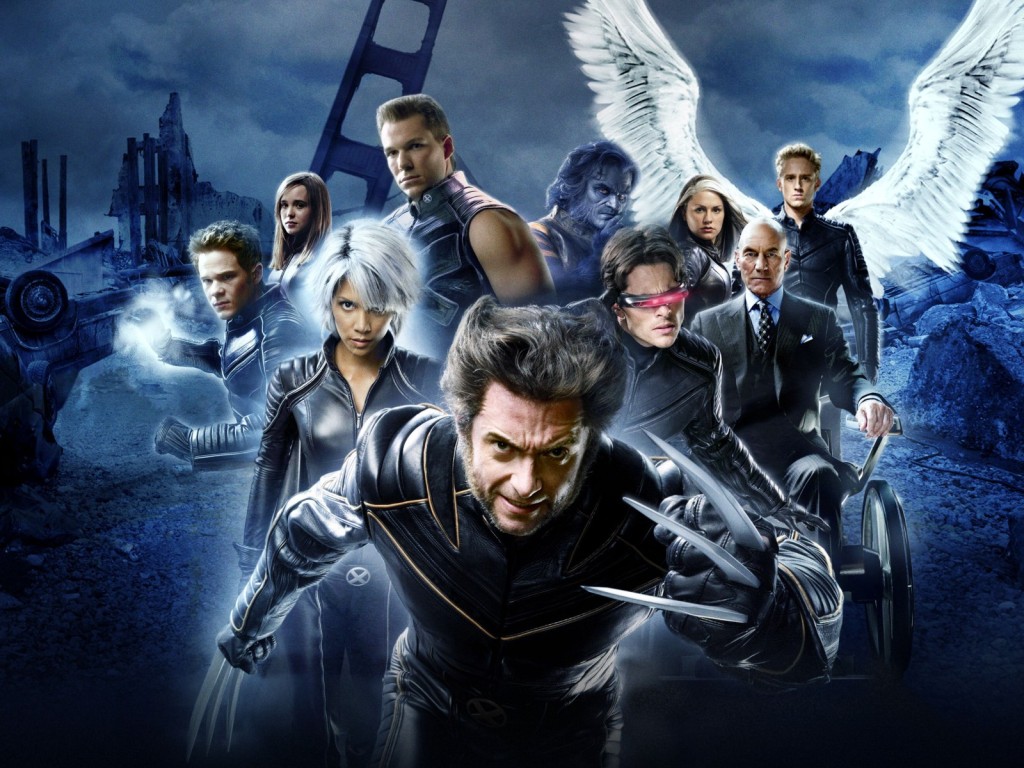
The first article the really seemed to stand out to me was on DNA and how eugenics have affected the film industry. It is called "The Devil in Our DNA: A Brief History of Eugenics in Science Fiction Films" by David A. Kirby. It is interesting to me because goes through the different eras over the last 100 years and describes how the history of eugenics has affected a specific genre of movies (as film is a type of storytelling). More specifically it discussed its affect on science fiction films such as Life Without a Soul (1916) or even the more popular X-men films. In the former of the two films (as an adaptation of the novel "Frankenstein" by Mary Shelly, the main character uses alchemy to create the perfect human. This shows a very rudimentary understanding of genetics and what makes humans the way that we are. In the latter of the two, the producers chose to take some time in the films and show how it is sections of DNA that have mutated to allow certain people to have so-called "superpowers". This film franchise has taken our much greater understanding of DNA and used it to make the story more plausible. This leads me to wonder how much advances in the field of science have added to the film industry (Kirby 83-108).

The second article I found was a vastly different type of problem. It is about some papers written during the Middle Ages by an Islamic man about treating sicknesses of the poor. It was of a genre that was popular during this time period called "medicine for the poor". This physician (who has a ridiculously long and complicated name) wrote a number of medical texts including one called "Medicine for the Poor and Destitute" which covered treatments for diseases from headaches to podagra (or gout). While it discussed the treatments for various ailments, it said little about the causes or the symptoms of them. The recipes for these remedies are considered somewhat "magical" in nature and contain ingredients such as urine or animal excrement. While this seems disgusting and unhealthy to us (because of the modern medicine and a better understanding of diseases, it helps to show what life must have been like in this time period. It is a glimpse into the story of a people that might otherwise have not been known to us (Bos 365-375).


Bos, Gerrit. "Ibn Al-Jazzār on Medicine for the Poor and Destitute." Journal of the American Oriental Society. 118.3 (1998): 365-375. Web. 5 Oct. 2013.
Kirby, David A. "The Devil in Our DNA: A Brief History of Eugenics in Science Fiction Films." Literature and Medicine. 26.1 (2007): 83-108. Web. 4 Oct. 2013.

Sunday, September 29, 2013

Alluding to the Brain

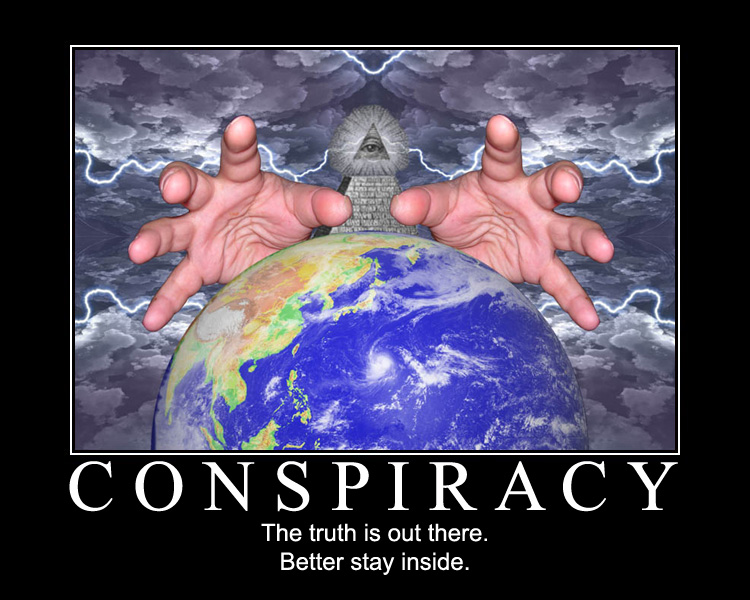
This weeks reading was particularly interesting to me because it allowed for the perfect way of combining my two emphasis areas. Aside from that, it was also interesting to me because he covered some very unique and diverse topics within one chapter. The three areas that piqued my interest the most were the split-brain patients, the mental-illness in writers, and conspiracy theories. The last interested me mainly because I have never been one to give much credit to conspiracy theorists. In one article I found about conspiracy theories it said that people who were more likely to participate in one such conspiracy are much more likely to believe in a similar one. I thought this was kind of fun and fascinating (Douglas, and Sutton). What causes people to invent conspiracy theories? The one that helped combine my two areas of emphasis (English and Biology) was the mental-illness in writers. Gottschall pointed out several authors that have written books while experiencing symptoms of mental illness (including addictions). One article I read searched through Norwegian, Danish, and Swedish libraries to find books by people with mental illnesses. While most of the books that they studied were autobiographies, this caused me to wonder; does the mental illness cause them to become writers? Or are they writers at heart and just do so when they find a topic to write about (their mental illness)? It is something that I wondered while reading this article ((Anderson, and Larsen)


Anderson, Anders Johan W., and Inger Beate Larsen. "Hell on earth: Textual reflections on the experience of mental illness." Journal of Mental Health. 21.2 (2012): 174-181. Web. 29 Sep. 2013.
Douglas, Karen M., and Robbie M. Sutton. "Does it take one to know one? Endorsement of conspiracy theories is influenced by personal willingness to conspire." British Journal of Social Psychology. 50.3 (2011): 544-552. Web. 29 Sep. 2013.

Sunday, September 22, 2013

Dreams Don't Come True...?

"Dreaming permits each and every one of us to be quietly and safely insane every night of our lives." (William Dement) "Trouble is the fat red thread that ties together the fantasies of pretend play, fiction, and dreams." (Jon Gottschall) While these two quotes seem to have relatively little in common, with some thinking they become closer than one could even "dream". Dreaming is something that each of us do each night whether we remember it or not. However, when we do remember our dreams, they are often rife with trouble (that so called "fat red thread"). In an article, it discusses how dreams are sites of creativity and agency as well as a means for inventing new forms (Kirtsoglou 321-335). While this article didn't directly discuss how dreams are insane, I was inclined to think about how most creative ideas are considered "insane" by those that can't quite grasp the beauty behind the idea. Another article I found completely wonderful was one discussing the similarities between animals dreams and humans dreams. It concentrated on some research done regarding neuroscience and behavioral biology. It goes into the belief that dreams "perform a crucial function in all animals." This article also goes in depth into the study mentioned in Gottschall's book about the cats with the centers removed from their brains to study their sleep cycles and dreams. I enjoyed very much reading the biological studies talked about within this article (Stevens 53).


Kirtsoglou, Elisabeth. "Dreaming the Self: Unified Approach towards Dreams, Subjectivity and the Radical Imagination." History & Anthropology. Sep 2010: 321-335. Web. 22 Sep. 2013.
Stevens, Anthony. "JUNGIAN PSYCHOLOGY, THE BODY, AND THE FUTURE." Journal of Analytical Psychology. Jul 1995: 353. Web. 22 Sep. 2013.

Sunday, September 15, 2013

Suicidal Tendencies

One definition of "storytelling" that I found online states that contemporary storytelling includes cultural preservation, instillation of moral values, history, personal narrative, political commentary, and evolving cultural norms. This supports Gottschall's theory when he says "There is a yawning canyon between what is desirable in life and what is desirable in fiction." The moral values that are taught in stories change between the various cultures, but the results are always the same. What is desirable in life is very different than what is desirable in our stories. One study contradicted this theory by saying that stories are so much more than that. It said that readers have to be socially, psychologically, morally, emotionally, and cognitively involved in a story in order for it to affect them in any significant way. Not only that, but it says that across many different cultures, all stories will affect people in the same way.
Again, in Gottschall's section of the book called "A Mirror of Life?", he indicates that stories of wish fullfillment don't tempt us nearly as much as stories of people that have actually lived exciting lives. Another study I read stated the opposite. It examined the various myths from Norway, Iceland, and Finland that said as soon as the lives of the protagonist got difficult, they ended their lives in various methods of suicide (sometimes before the adventure or excitement even got started)! The conductors of this study also said that suicide provided the protagonist an escape from any excitement. This directly contradicts what Gottschall was saying in his book.

Friday, September 6, 2013

The Dark Side

Humans have an interesting fascination with the "darker" things in life and storytelling. Our ears immediately tune into the sounds of people gossiping. We are completely enthralled with the scary parts in stories. Most of the dreams we may remember involve running from monsters, or murdering bad guys. Almost every story that we read/watch/listen/invent contain some sort of element that doesn't belong in a simple "happy" fairytale. A story isn't considered good if their isn't some sort of problem to overcome like aliens invading or a bad guy to make pay for his crimes. As readers, we look for books filled with excitement and adventure and, of course, a happily ever after sort of ending! Storytelling is something that has changed over time. For example, if you have ever read the original Grimm fairytales, you also remember how Cinderella's step sisters cut off their toes and their heels to try and get the glass slipper to fit. Or how one little girl didn't listen to the directions given to her and she couldn't take off her red dancing slippers. The only way she could stop dancing was to cut off her own feet. These stories were meant to either be told to little kids and teach them the importance of listening to the elders or to provide entertainment for adults to tell to each other (like how Little Red Riding Hood does a strip tease for the wolf in one version of the story). It is interesting to see how these "children's tales" have changed as society has progressed and really changed to be geared more to children with some scary elements removed and, like the Disney versions, a happily ever after with a prince. Now, however, there are more stories than ever before and adults are able to find their "dark" kicks from different sources than the old fairytales. We are drawn into stories in the mind set that they are a clear view into someone else's life with no negative side affects. Many of the darker elements of story draw adults in because it is what they are interested in or have questions about. Our minds elicit powerful images based on things we have seen or heard. The way we tell stories has changed through time and will continue to do so, but humans will never stop telling stories and they always have. As technology advances, stories change to incorporate things that have never been in stories before, but the basic story line has always been the same. Do you think stories have changed?

Monday, September 2, 2013

Dying or Thriving?

Storytelling is something that (as I've already said) is difficult to define. I think that stories are anything that can make us lose sight of the real world. Because of this, I think it is extremely easy to be sucked into several different types of "stories". And by that, I mean stories that most people wouldn't consider stories. I believe anything from books to video games to social media websites can be considered stories. What story changes more frequently than the news feed on Facebook? Or the video game your nephew gets sucked into for up to 12 hours a day? In the book "Narrative Across Media: the Languages of Storytelling" it talks about the several definitions that have been given to storytelling. I found myself agreeing with parts of their definitions, but never with a whole definition. I think it is something very individual and depends on each persons perceptions. The stories can change, but they all accomplish the same things; making us lose sight of the world around us and being sucked into our Neverland's. Dreams are also stories that the brain can tell us. They can have nothing to do with our real life or they can be all of our hopes being dashed. Stories can be told orally or visually, by thinking or through the written word. Every book is a story no matter the genre. Each T.V. commercial, radio commercial, or billboard tells its own story. One billboard in the Salt Lake area gets your attention because it is a lime green background with the words "Your wife is so hot... Get your A.C. fixed". No matter what, your eyes will be caught by the bright colored background or the first phrase will grab your attention because it isn't something you see everyday. It tells its own short story and immediately your eyes are drawn to several possible alternatives to where this billboard could be going.
Storytelling is something that is definitely a thriving art. It will never die so long as humans are alive to continue the stories. The definition of storytelling could possible change, but it will never dye completely until the human race dies. Neverland is hidden inside each of us. It is a place we return to several hours every day and night. Each person has a different idea for what Neverland is like and where it is, but it is in each of our minds. It controls much of our "thoughtless" hours with simple daydreams and at night with complex imaginings. It is where we are sucked to during our ours of listening/reading/watching of stories. It is complex and lovely and scary. Neverland contains our worst nightmares as well as our best dreams. It is something that changes as we grow older and becomes (in ways) more complex. Neverland is somewhere I choose to go a lot whenever I have free time and can open a book or put a movie on to watch. I enjoy most of my time in Neverland and imagine that most other people enjoy their time there as well.